



Tottenham facing relegation, what's the cause?


Just one year after lifting a European trophy, Tottenham is confronting a nightmare scenario: dropping out of the Premier League for the first time since 1977. But why has a club once considered a top contender fallen into this situation?
1. The primary cause of the crisis stems from Tottenham leadership's inaccurate decisions. Entering the January transfer window, the club faced a clear choice: strengthen the squad to salvage the season or continue pursuing long-term plans.
The leadership, headed by CEO Vinai Venkatesham and sporting director Johan Lange, chose the second option. They refused to spend heavily despite a squad ravaged by injuries and severe shortages in midfield and on the wings.
The result was Tottenham entering the crucial phase of the season with a thin squad lacking depth. The limited signings, like young talent Souza, lacked sufficient experience to make an immediate impact.
A bigger mistake was allowing a series of attacking pillars to depart over recent years. Harry Kane moved to Bayern Munich, while club icon Son Heung-min left to join Los Angeles. Subsequently, Tottenham sold Brennan Johnson without a worthy replacement plan.
These three names contributed over 80% of the team's goals for many seasons. Their departure left Tottenham without players who could decide matches in difficult moments.
Replacement signings like Xavi Simons or Mohammed Kudus were consistently injured or failed to meet expected performance levels. Meanwhile, attempts to sign Eberechi Eze from Palace or Morgan Gibbs-White both failed.
The combination of ineffective transfer strategy and selling attacking pillars plunged Tottenham into a goal-scoring drought, their biggest issue this season.
2. Tottenham's second mistake lies in the coaching staff. After dismissing Thomas Frank, the leadership appointed Igor Tudor hoping he could revive the team. However, this decision quickly backfired.
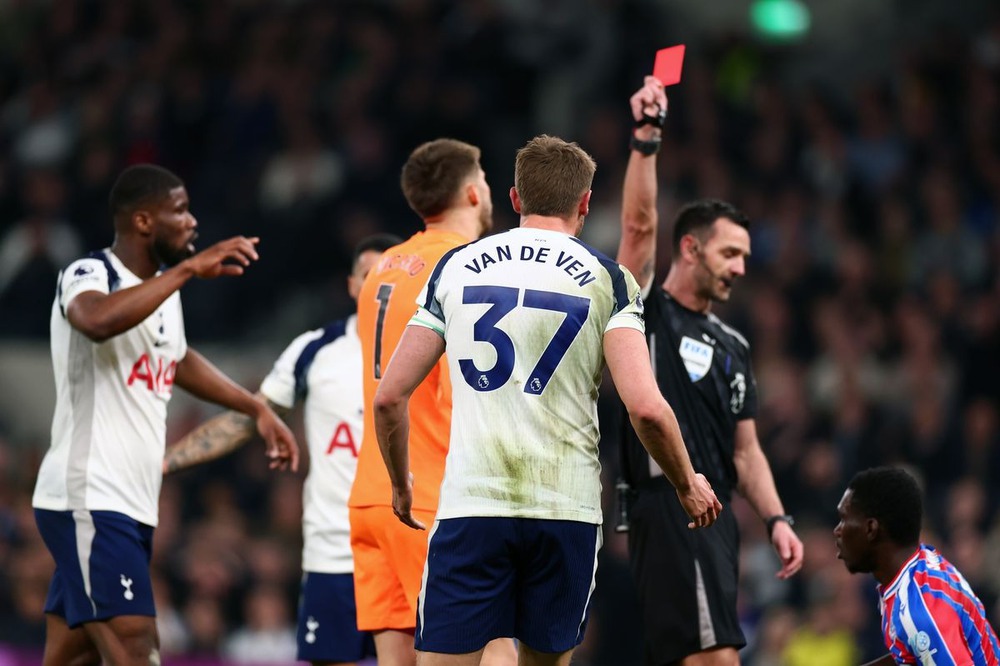
The relegation threat is very clear for Tottenham
Tudor is famous for a 3-4-3 system, but Tottenham lacked suitable personnel to operate it. Consequently, the team played chaotically in both attack and defense. In just the first three matches under the Croatian strategist, Spurs lost all three and conceded nine goals.
Failure in the derby against Arsenal and losses to Fulham and Crystal Palace clearly showed the team's loss of direction. The defense repeatedly made individual errors, exemplified by Micky van de Ven's disastrous red card against Palace.
Statistics show Tottenham conceded at least two goals in nine consecutive Premier League matches, the worst figure in club history. Simultaneously, they are among the teams receiving the most penalties in the league, reflecting severe lack of discipline.
The dressing room is also unbalanced. Many veteran players couldn't maintain form, while young talents like Archie Gray or Mathys Tel had to shoulder excessive responsibility.
The worrying issue is that even when Tottenham plays hard, they lack the quality to finish off opponents.
3. All the aforementioned problems make Tottenham resemble a "ship full of holes." Leadership erred in transfers, the coach didn't fit the squad, and players lacked stability and discipline.
An 11-match winless streak from early 2026 is clear evidence of that collapse. Tottenham fans even left the stadium during the first half of a Palace match, directing their anger toward the leadership in the stands.
The relegation risk isn't just a reputational shock but could cost the club up to £250 million in revenue. Many club staff fear potential layoffs if Tottenham must play in the Championship.
Currently, Spurs still have a few matches to save themselves. But without drastic changes, the North London club could become one of the most shocking collapse stories in Premier League history.
One year ago, Tottenham celebrated a trophy. Now, they are fighting to avoid the disaster of relegation, a steep price for prolonged mistakes from the pitch to the boardroom.



 Links
Links
 Contact
Address:123
Number:+123
E-mali:i123@gmail.com
 App
App